Tuesday, November 19, 2019

From Touch Screens to JustGiving: Business Lessons from Serial Founder and Investor Bela Hatvany (Harvard MBA)

Successful business founder and investor, inventor of the Touch Screen, Bela Hatvany, talks about founding your own business.


After selling multiple companies for many hundreds of millions of dollars, Bela founded the world's first charitable giving site in 2000, JustGiving.  

Bela talks about his start-up business philosophy: He embraces not only looking after his investors but also his employees.

Six questions about entrepreneurship with Bela


Subscribers to my blog and website got the unique chance to ask Bela questions themselves.

1. Did he come up with these business ideas through problems he was noticing in his day-to-day life, or was it from “brainstorming business ideas or a sudden idea”?

My first business was just luck. I founded my first company, COMSISA, in Mexico City, which computerised and served sugar mills and local companies. 

My second business was through seeing problems I was noticing in my life.

I needed to access information for work, which I found hard to do. CLSI was the first company to develop the minicomputer for use in libraries. After returning to live in London in 1981, I sold it to Thyssen Bornemisza in 1983.

My third business was founding Silverplatter. I wanted a better way to store information and decided to try using the CD Rom. So my company was the first to put library information on CD-ROMs. I sold Silverplatter to Wolters Kluwer for $113 Million in 2001.

2. Tell me about how you invented the touch screen?

When I was working in the library business, I was figuring out a way to be able to move information around on the screen itself. I remembered the solution to a problem I had come up with when I was an engineering student at St Andrews University and applied it to this problem. 

I pulled an engineer in our team onto the problem. Henry NG, was able to insert metal between two sheets of glass that we could then use to set up basic touch screen technology. Therefore, in 1980, with Henry Ng, I invented the touch screen, which is now used on Smartphones and Tablets.

3. What was your best day and worst day of work as an entrepreneur?

At CLSI, it was getting my first big contract, which was enough to persuade investors to put in seed money. At CLSI, we also went bankrupt, and I was fired from my own company. So that was my best and worst day, both at the same company.

4. What motivates you as an entrepreneur? 

Anger. Initially, I was incensed at how badly I was being managed as an employee in some large corporations. My managers were stupid and greedy. I knew I could do a better job myself. 

So I founded my first company to prove it to myself and them.  

When I decided to finance Just Giving, I had long been incensed by the waste and corruption in the charitable giving sector. Frequently, 100% of your donation was going to the administration of the charity.

In effect, none of the public contributions was reaching them. Just Giving brought down the charity's administrative costs from an average of 30% to only 5%.

I knew there must be a better way to run charities. But it was not until the Internet came along that I figured out what that was. (Blackbaud purchased Justgiving from Bela for £95 million in 2017).


5. If I wanted to become a business owner today, what advice would you give me?

A troubling trend I've noticed growing in our society is that of victimhood. People do not take charge of their lives. 

We can see this recently with the flooding in England. The Dutch have brilliant technology that has mastered these problems centuries ago. The Dutch reclaimed over half their country from the sea. So why can't we in the UK do this on a smaller scale in the twenty-first century? 

Stop thinking of yourself as a victim of your circumstances. When Viktor Frankl (author of 'Man's Search for Meaning') was imprisoned in a concentration camp and survived, while countless others perished, he was asked, 'How did you do it?' He replied that 'everyone else in there chose to believe they were starving. I chose to believe that I was fasting'.

6. Give me a quote or philosophy of life you love?

Over the years, many, many people, often very powerful ones, have asked me 'when will that be completed?'.Typically, they are pushing me for a deadline. 

Everywhere around me, I see people becoming less and less patient. 

Ironically, this demand for employees to be 'always on', and continually multi-tasking and working to deadlines has made them less productive whilst also damaging their health. 

- Productivity has been declining, particularly in the UK, for many years. So, where have all these deadlines got us? What have they achieved? Have they simply drained all innovation from us?

You are seeing all kinds of negative reactions to this widely adopted management philosophy; From alcoholism to obesity, from broken marriages to career burnout and the current pandemic of mental health issues.

Over my career, whenever people have asked me this question, 'when will this project be completed?' I reply: 'in the fullness of time'!

Monday, November 11, 2019

Four reasons you should be allowed to work from home.


A long time ago, I had a boss who insisted that we always meet up in craft beer pubs even though two of the marketing team were non-drinkers and none of the group enjoyed craft beer.

He also insisted we wore jackets at a retail digital marketing event in July in Chicago when it was baking hot and all the other attendees were in t-shirts and button-downs.

He got mad at me because I took a day off after an exhausting three-day event to go skiing at a mountain resort nearby. 

Well, he also didn't allow our team to work from home on Fridays when the ENTIRE rest of the office (including him) was working from home on Fridays. 

Why do companies, even some nimble tech startups insist that all their workers work in the office EVERY. SINGLE. DAY?

Here are my reasons why you should let your employees work from home

1. Productivity. In the UK this is at an all-time low. And I have to assume part of the problem is created my distrusting management who can't believe that their team is conscientious enough to clock in a full days work while they are at home.

The most productive I've ever been is when I've worked from home one day and in the office for four.  I almost always end up getting more done on that one day I'm working from home.

But I'm a big extravert (100% extravert in Briggs Myers). If even someone like me who thrives on working with others, benefits so much from working from home, imagine how much your talented, hard-working introverts will gain from it.

2. Open-plan offices. The preponderance of open-plan offices is proof that, as the writer, Somerset Maugham put it “The fact that a great many people believe something is no guarantee of its truth.” 

Almost every company has them, and virtually every piece of research on them shows that they are ineffective. They do not create open, warm, friendly, convivial environments. Generally, they create the opposite. 

If you want to have a great, honest conversation with a colleague, your open-plan office is not the place to do it. 

3. People have lives. When I had that boss who refused to let me work from home on Fridays, I had two small children. My wife was also working a demanding job, full time as a recruiting manager for another tech company. 

I also had some health issues which thankfully I don't have anymore. It would have meant the world to me, my wife and family. It would have multiplied my loyalty to the company more than anything, including money. 

4. Commute. Some of the companies I've worked for have been one and a half hours from my house. If I had had to go into the office every day, that would be fifteen hours travelling a week. Some part-time jobs are fifteen hours a week! Not to mention the toll on the environment of all that travelling. And the cost. 

And two of the ways companies still manage to screw up the work from home experience....... 

1. Out of sight. Out of mind. Yes, I'm working from home. No, I'm not happy to be ignored entirely. I've worked in a few roles that were WFH almost wholly, and this happened way too often. When it did, I found it almost impossible to have those tough but necessary conversations like thrashing out the annual budget.

2. Some people don't adapt to it well. HR directors having conversations over the phone that should be done face to face, at the very least on a video call. 

Bosses that keep shifting conference call times, or being late for them, in a way that they would never do for in-person meetings - they'd be too ashamed... You get the picture!


Saturday, November 02, 2019

Social media has turned the world upside down - How have marketers responded?


The Doors is my favourite 'old-skool' rock group. Their lead singer, Jim Morrison, graduated from the prestigious UCLA Film School, where he studied with acclaimed film director Francis Ford Coppola. Morrison was also a poet*.

One important aspect of Marketing is getting attention. Fifty years after his death, Morrison still generates a massive following on social media. The Doors are still as relevant as ever and sell many records (Jim Morrison's grave in Pere La Chaise Cemetry is Paris's third most visited tourist attraction).

In 2005, when I was pursuing my full-time MBA at Boston University School of Management, I had the idea of writing a paper about organisations like the Doors that had a devoted fan base drawn to their authenticity.

When I wrote my paper about 'realness' in Marketing, I was influenced by a Harvard Business School case study** written by Susan Fournier, the new Dean of Boston University's business school. 

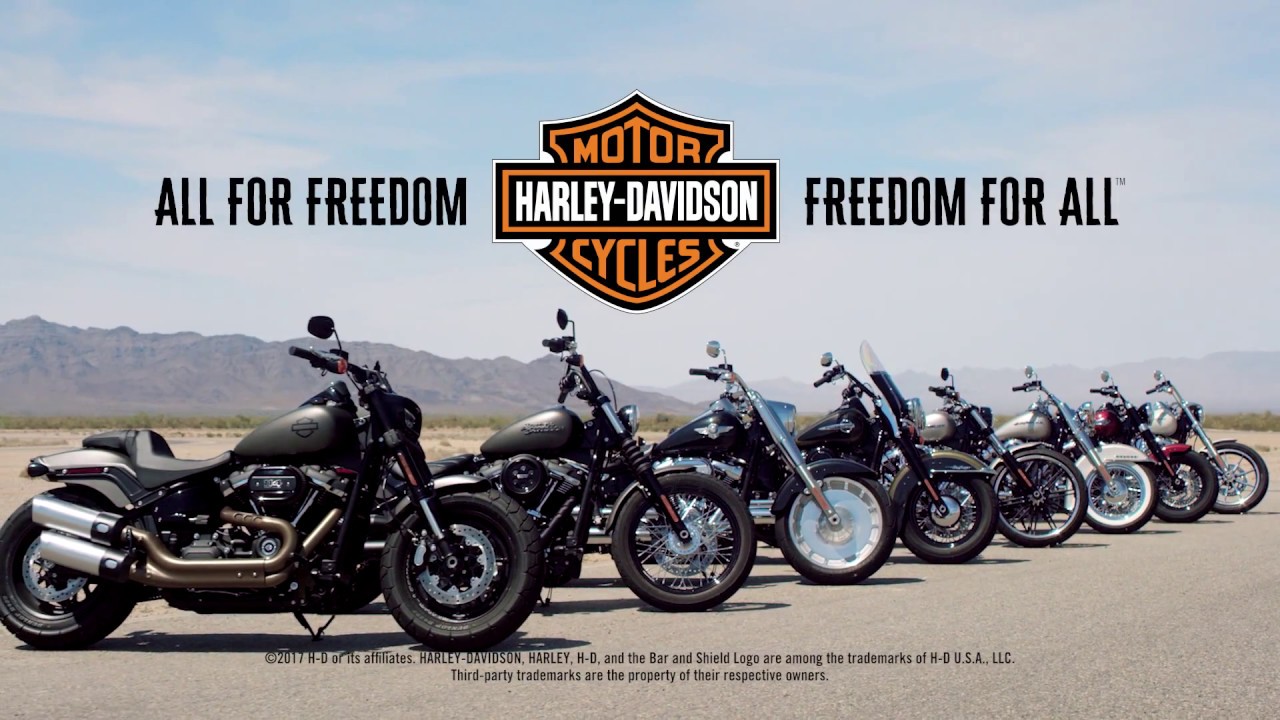
She wrote a case study about the Harley Davidson Owners Group, or ‘Hogs'. It was HBS's first-ever 'multi-media' case study.

Harley-Davidson does not compete with other motorcycles in any typical way. Its motorcycles are not particularly fast, reliable, or eco-friendly.

They are certainly not cheap. BMWs, Yamahas, Ducattis, or Hondas will outperform them in every way. However, what Harley-Davidson does have, which the other brands lack, is a unique bond with its customers and the Harley-Davidson community.

The Harley Davidson Owners Groups ('Hogs')

The Hog Club goes on rides, and the riders catalogue their adventures. A few years ago, a marketer suggested that Harley use dirt—and grease-free chrome. 

But the Harley team shot this idea down instantly. They believed that part of the appeal of having that bike for a Harley owner is cleaning the grease off it after a hard day's ride.


Lululemon (image below) is another top brand with an almost cult-like following. Lululemon isn't just a product; it's a lifestyle.


Since I wrote that paper, a celebrity and property developer, Donald Trump, first put himself forward as a candidate as a publicity stunt to increase TV ratings on his show 'The Apprentice'.

Donald Trump made many outrageous statements during this period. Yet every time the political experts said, "That’s it, he’s crossed the line. He's finished; he just got more popular," the pundits couldn't believe it. 

Similarly, Nike took a decidedly political stand on Colin Kaepernick, quarterback for the San Francisco 49ers, kneeling during the National Anthem to protest against racism in the USA.


Most marketers at the time said that Nike made a terrible mistake by releasing this ad. Today, 80% of marketers still say that you shouldn’t take a strong position at the risk of alienating your customers.

However, just as with Trump, being controversial worked for Nike. Nike has made six billion US dollars since that ad, which was loved and loathed in equal measure.

Further reading (authenticity & community): The Power of Microinfluencer Marketing
 

*Extract from ‘The Movie’ - a poem by Jim Morrison
The auditorium was vast and silent
as we seated and were darkened, the voice continued.
The program for this evening is not new.
You’ve seen this entertainment through and through.
You’ve seen your birth, your life and death
you might recall all of the rest.
Did you have a good world when you died?
Enough to base a movie on?


** Harvard Business School Building brand community on the Harley-Davidson Posse Ride